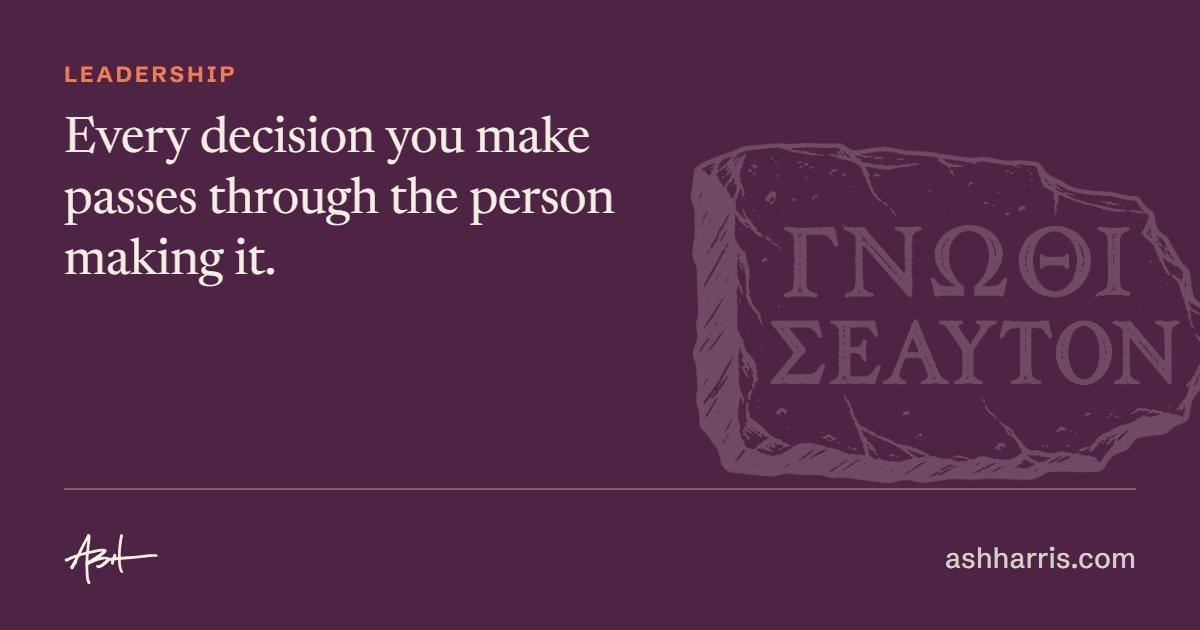
Knowing yourself is the most practical skill a leader has. Every decision you make passes through the person making it: who you hire, which clients you take, what you say when a meeting goes sideways. If you don't know your own patterns, they make those decisions for you, and they don't ask first.
Two words carved at the temple of Apollo at Delphi, about 2,500 years ago, and I still think they're the key to just about everything. Not as a slogan. As a working tool.
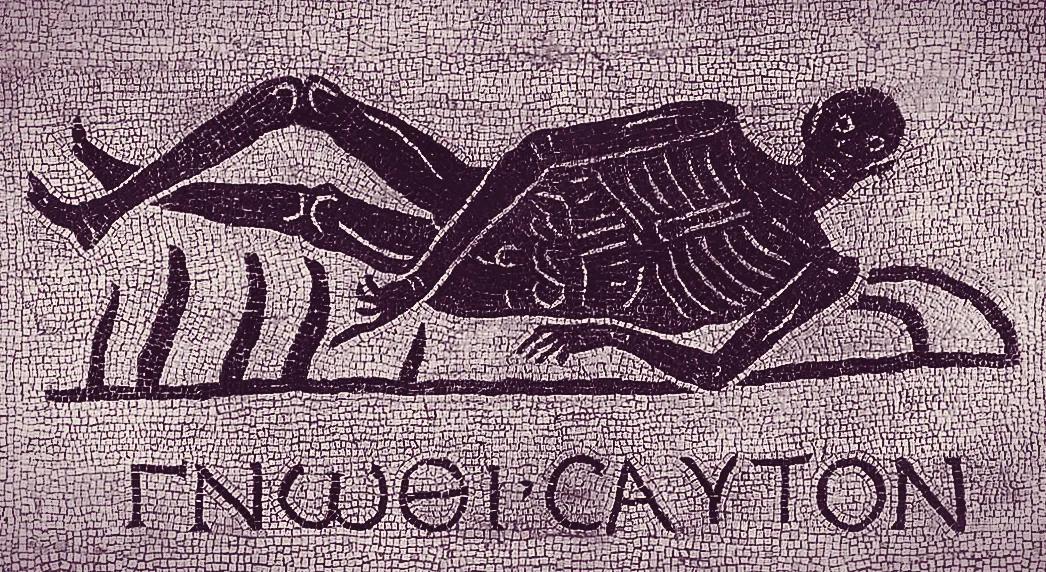
Every decision has a decider
Most leaders put real effort into understanding the market, the numbers and the competition. Far fewer put the same effort into understanding the instrument doing all that understanding.
That instrument has habits. It gets impatient at a certain hour. It says yes to people it likes and finds reasons to doubt people it doesn't. It overrates the work it enjoys and puts off the work it doesn't. None of that is a flaw. It's just what a person is. The trouble only starts when you can't see it, because then you're steering with a hand on the wheel you didn't know was there.
The Greeks put the advice over the door of a temple. Most of us would settle for a sticky note on the monitor.
What it looks like at work
Knowing yourself sounds abstract until you watch what it changes.
You hire for the gaps, not the mirror. A leader who knows what they're great at, and what drains them, builds a team around both. A leader who doesn't tends to hire people who think the way they do, then wonders why the same blind spot shows up in every project.
You know what a "yes" costs you. Some work gives you energy. Some quietly takes it. When you know which is which, a good offer that's wrong for you gets easier to decline, and the right one gets your full attention.
You know your weather. Everyone has a version of themselves that shows up tired, rushed or under pressure. Knowing what yours sounds like lets you catch it before it sends the email.
You can say "I don't know." You can only say it with confidence when you know where your knowledge actually ends. I've written about why that sentence builds more trust than any confident answer. It starts here: you have to know your own edges before you can name them in front of a client.
It isn't a personality test
There's no shortage of tools that will hand you four letters, a color or a number. Some of them are useful. They give you vocabulary, and vocabulary helps.
But a result isn't the same as self-knowledge. The test tells you what you said about yourself on a Tuesday. Your calendar, your sent folder and the decisions you're still proud of a year later tell you what you actually do. When the two disagree, believe the evidence.
The people around you are evidence too. They've watched you in more meetings than you have, since you're usually busy being in them.
How I work at it
I studied counseling and psychology before I ever built a website, and I spent ten years in Dale Carnegie training, first as a student and then as a student coach. Both taught me the same thing from different directions: you can't read the room well until you can read yourself in it. That's on my About page because it's still how I work.
A few habits that keep me honest:
- I ask people who will tell me the truth. Not for compliments. For patterns. "What do I do when a project gets stressful?" is a better question than "How am I doing?"
- I notice what I keep coming back to. The problems I solve for fun on a Saturday tell me more about what I'm for than any plan I've written.
- I write down the decisions I'd make differently, then look for the thread between them. There usually is one, and it's usually me.
- I pay attention to the work that makes me lose track of time. For me it's the whiteboard: sitting with a client and working out what actually matters. That tells me where to spend my best hours.
None of this is finished. Knowing yourself isn't a box you check. It's a practice, like fitness, and it changes as you do.
To thine own self be true
The line that usually rides along with "know thyself" arrived about 2,000 years later, in Hamlet. Early in the play, Laertes is about to sail for France, and his father, Polonius, sees him off at the door with a list of advice. Give every man thy ear, but few thy voice. Neither a borrower nor a lender be. Then he saves the best for last:
“This above all: to thine own self be true,
And it must follow, as the night the day,
Thou canst not then be false to any man.”

Put the two together and you get the version people carry with them:
“Know thyself, and to thine own self be true.”
Knowing yourself is the first half. Acting on it is the second, and it's the harder one.
It's one thing to know you do your best thinking with people in the room. It's another to build a business that puts you in the room. It's one thing to know which clients you work well with. It's another to turn down the ones you don't, kindly, and send them to someone who'd be a better fit.
That's where knowing yourself stops being philosophy and starts being strategy. The leaders I most admire have usually done both halves. You can feel it when you sit across from them. They aren't performing anyone. They know who's in the chair.
So here's the question I'd leave you with: when you made your last big decision, who made it? You, or a habit you haven't met yet?